SUSTENET premiered at the 22nd European Conference on Thermoelectrics (ECT2026), that was hosted this year in Edinburgh, at the John McIntyre Conference Centre. If you followed our news in the last weeks, you know that we organised several sessions, generated by our three “technical” Working Groups.
The workshop series demonstrated the strong engagement of the thermoelectric community with SUSTENET’s mission to accelerate the development of more sustainable, efficient and impactful thermoelectric solutions. In total, more than 110 participants took part across the three events, creating valuable opportunities for knowledge exchange, networking and collaboration. Here is a summary of what happened during our workshops, held on Monday 14th and Tuesday 15th September.
Integrating Sustainability into Material Selection
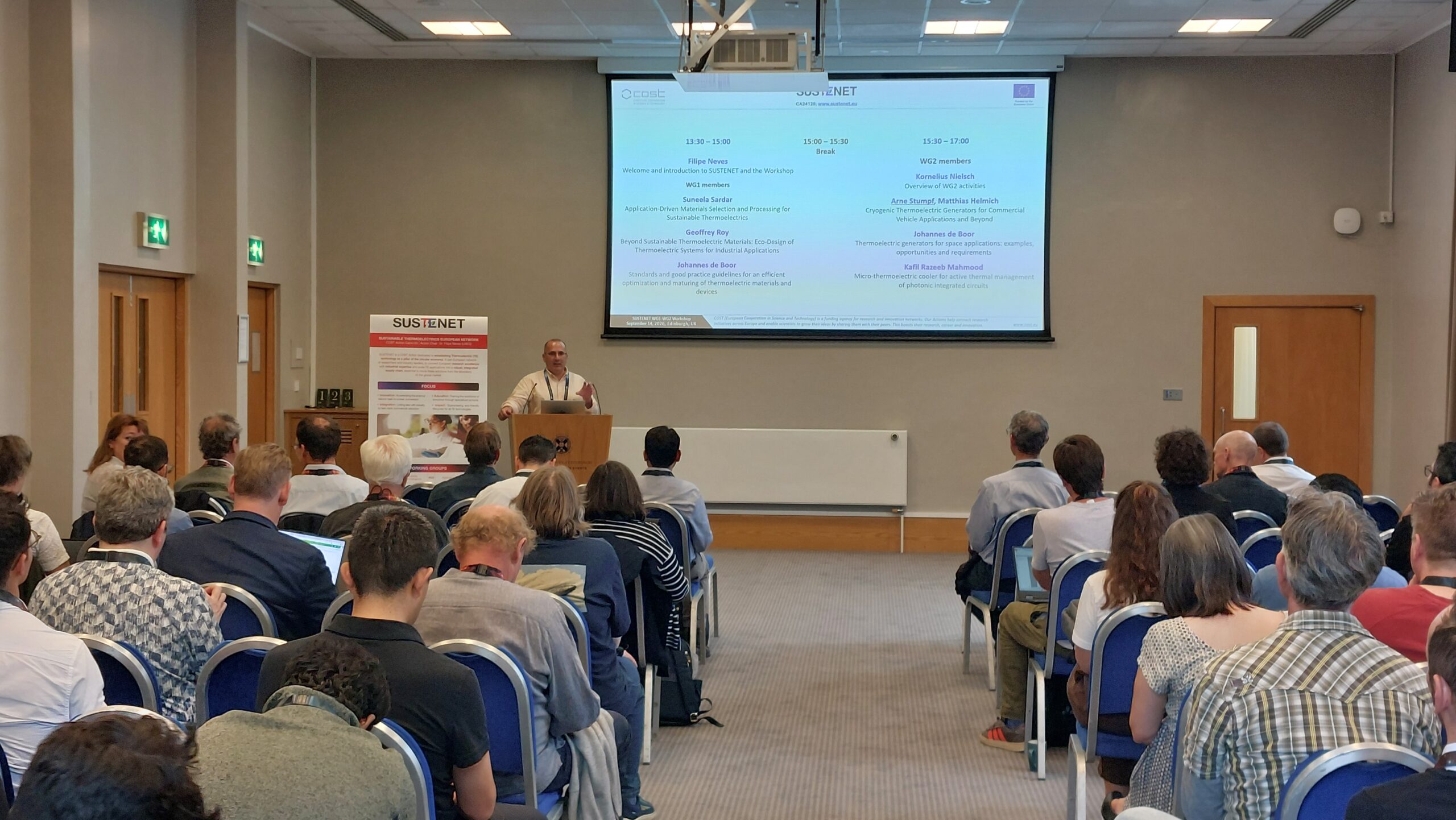
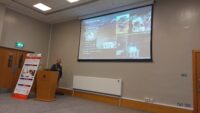
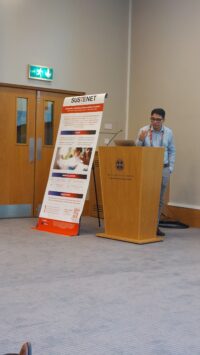
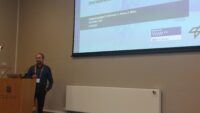
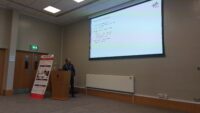
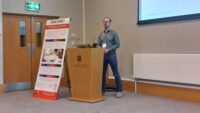
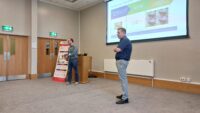
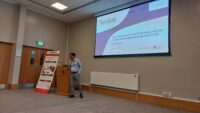
Held on 14 September 2026, the first two workshops were organised under the common theme “Integrating Sustainability into Material Selection” and were led by Working Group 1: Scaling Sustainability through Artificial Intelligence and Working Group 2: Applications and User Cases.
The workshops explored how sustainability considerations can be systematically integrated into the development, assessment and selection of thermoelectric materials and devices. Discussions focused on application-driven material selection workflows, artificial intelligence and digital tools for sustainability assessment, benchmarking methodologies, good-practice guidelines and real-world examples demonstrating the integration of sustainability principles into thermoelectric innovation.
The programme featured contributions from leading experts across academia and industry, including Suneela Sardar (University of Lincoln), Geoffrey Roy (Thermo Power Systems and UCLouvain), Johannes de Boor (German Aerospace Center (DLR) and the University of Duisburg-Essen), Kornelius Nielsch (TU Dresden and IFW Dresden), Arne Stumpf and Matthias Helmich (DLR), and Kafil Razeeb Mahmood (Tyndall National Institute and the University of Limerick).
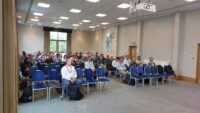
The two sessions attracted approximately 85 participants, reflecting the growing interest within the thermoelectric community in embedding sustainability, circularity and resource efficiency into future materials and device development. The lively discussions highlighted the need for greater integration of sustainability metrics into thermoelectric research and showcased the valuable role that artificial intelligence, standardisation and application-driven approaches can play in supporting more sustainable innovation pathways.
Shaping the Future of Thermoelectric Applications
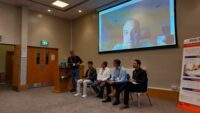
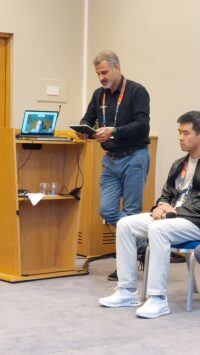
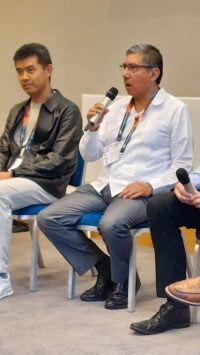
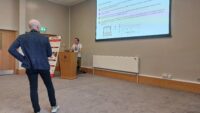
The third workshop, “Shaping the Future of Thermoelectric Applications”, was organised by Working Group 3: Business Development and Supply Chain on 15th September and focused on emerging application opportunities, industrial needs and future market perspectives for thermoelectric technologies.
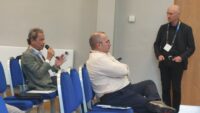
Bringing together around 30 participants, the workshop provided an interactive forum for discussing application requirements, technology gaps, commercialisation pathways and future research priorities. The format encouraged in-depth exchanges between participants and generated valuable insights into how thermoelectric technologies can address future societal and industrial challenges.
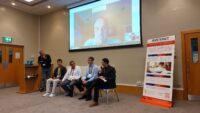
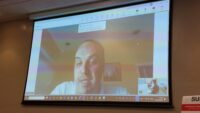
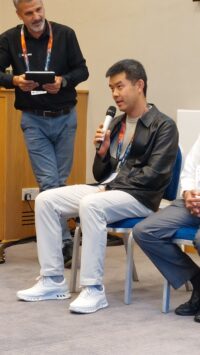
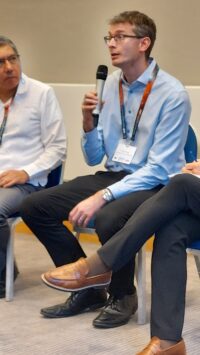
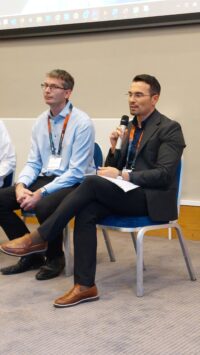
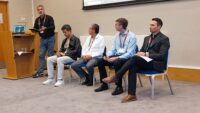
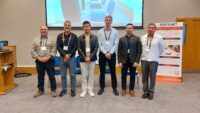
The session was moderated by Raúl Aragonés (AEInnova and Autonomous University of Barcelona, Spain) and featured a panel of experts representing industry, research organisations and academia from across Europe, including Hao Yin (TEGnology ApS, Denmark), Vicente Pacheco (Fraunhofer IFAM Dresden, Germany), Richard Tuley (European Thermodynamics Ltd and Queen Mary University of London, United Kingdom), Llesh Lleshaj (University of Tirana, Albania) and Marko Ilić (University of Niš, Serbia) – connected remotely.
Discussions explored promising application areas for thermoelectric technologies, barriers to wider industrial adoption, business opportunities, investment challenges and the role of collaborative European networks in supporting innovation and market uptake. Participants exchanged perspectives on how sustainability, performance, cost and manufacturability can be balanced to accelerate the deployment of thermoelectric solutions in real-world applications.
To extend the impact of the workshop beyond those able to attend ECT2026 in person, recordings of the full session have been made freely available on the SUSTENET YouTube channel. The recording provides a valuable resource for researchers, students, innovators and industrial stakeholders interested in learning more about the opportunities and challenges shaping the future of thermoelectric technologies.
▶ Watch the recording:
Shaping the Future of Thermoelectric Applications
And do not forget to subscribe to the channel!
Strong Community Engagement
The Edinburgh workshop series highlighted the importance of connecting sustainability assessment, materials development and application requirements across the thermoelectric value chain. By bringing together experts from universities, research organisations and industry, the events fostered new collaborations, strengthened existing partnerships and stimulated discussions that will help guide future research and innovation activities within the thermoelectric community.
The strong attendance at the sustainability workshops and the active participation throughout all three events confirm the relevance of SUSTENET’s activities and the growing recognition that sustainability considerations must play a central role in the future development and deployment of thermoelectric technologies.
Pictures from the workshops
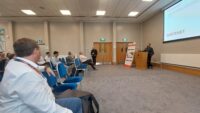
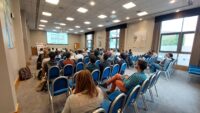
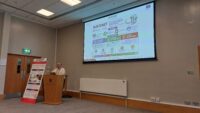
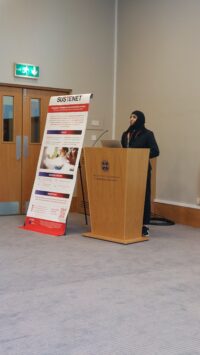
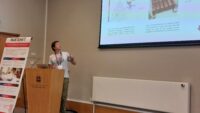
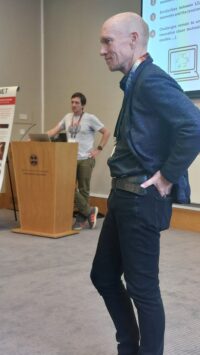
Workshops of 14th September

Workshop of 15th September